Fashion has been in the spotlight recently because of its perceived disposability. Consumers and companies alike are having to consider the lifecycle of clothes: from the materials used, to the people who make them, to their disposability. Fashion must become more sustainable or it simply will not survive and neither will our earth.
During my lockdown period, I had time to reflect and revisit my wardrobe. I took time to ask myself whether I was being sustainable and playing my part in the strengthening of our environment. This awakened me to the fact that I had so much clutter and inconsequential items in my closet; Instead of throwing them away, I donated half to charity and the other half I decided to resell. I created an account on both Depop and Vestiaire Collective and started to resell my old treasures. Not only is this extremely sustainable and a good way to earn some extra cash, but it was also a fun little lockdown project. I looked at how to brand my items to sell well and what the market was looking for at the time. It was interesting to review trends and try to anticipate what would sell well. I highly encourage everyone to create an account on either one of these websites and go through their wardrobes and resell the clothes that they no longer use. Clothes do not have a life span and they should not be thrown out after one or two wears; it is a dishonour to the craftsmanship that went into making those pieces. Thinking about sustainability and fashion in everyday life inspired me to create a blog and talk openly on this topic.

The book Fashionopolis was a real revelation to me in beginning to understand fast fashion – how it became so prevalent, its impacts on people and the environment alongside the solutions we need to start implementing to make the fashion industry more responsible and ethical. The positive thing is that many brands are committing to drastically reduce their Co2 emissions and working with partners like the Ellen McArthur foundation to rethink production processes and supply chains. Brands are increasingly becoming more aware of their disposability and the damaging effects this has.
Fashionopolis opened my eyes to the fashion world. It taught me facts and statistics that I never knew before. Zara, for example, alone disregards roughly around 840 million garments every year for its 6,000 stores worldwide, often at sub-poverty wages for its workers. Zara alone is so damaging to the environment that the waste thrown into once thriving rivers in China and India have been completely destroyed and now transformed into biologically dead zones replete with cancer causing chemicals. If that does not say something about Zara’s policies and waste, I don’t know what does. When reading statistics such as these, it really makes you think and question whether or not you really need to buy those extra 3 jumpers from Zara that you will wear once then toss.
Fashionopolis opens with the first chapter based around Melania Trump and her $39 ‘I really don’t care, do you?’ Zara jacket, that caused such an uproar in the media in 2018 (rightly so). Melania wore this jacket during a trip to a migrant child detention centre. This begs the question, was this really the appropriate statement jacket to wear on a trip such as this one? Not only was this seen as hugely ignorant and rude ,but it was also very clear that Melania would only wear this jacket once then throw it away, not being very sustainable; she is not a good role model in any aspects. This just shows that fashion really does speak volumes- it can send a message not just about your personality and taste but about who you are as a person, what you think of the world and what you find important. This really got me thinking about fashion, not just as an artistic statement but also a statement of identity and policy! What do you really believe and are you willing to show it with what you wear?
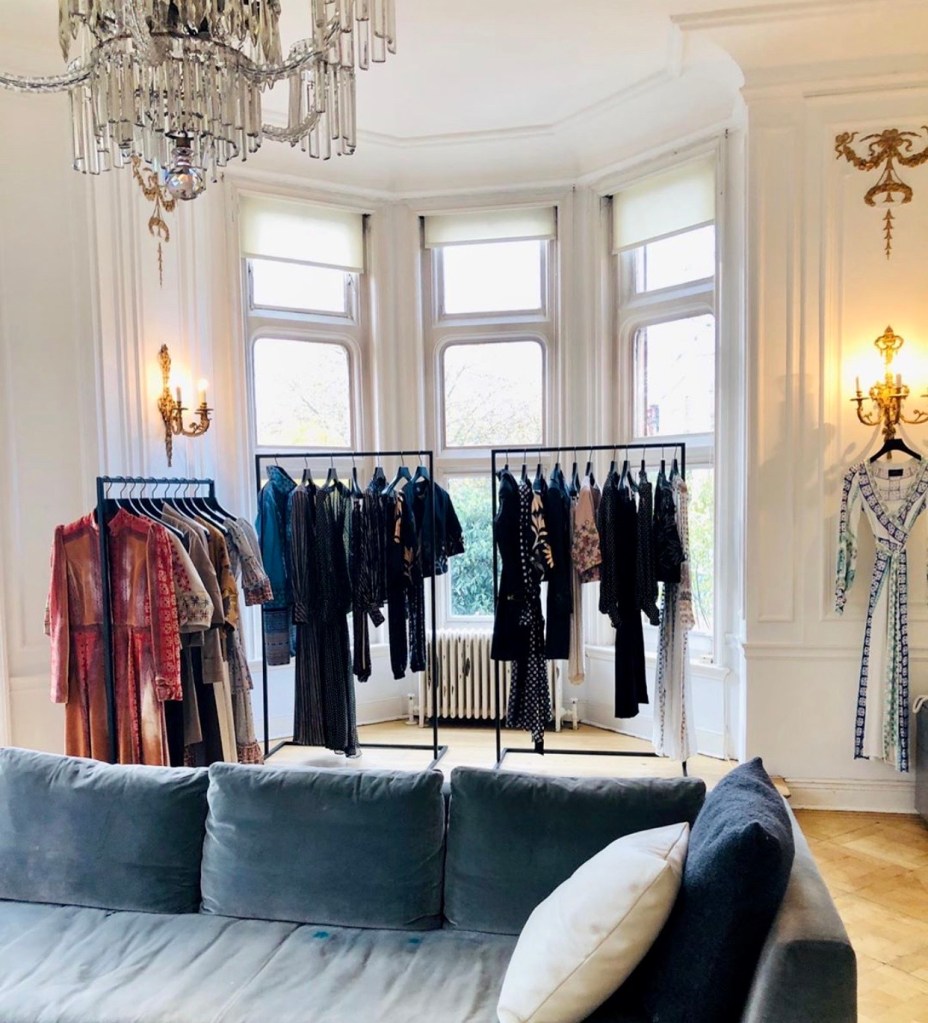
As I have previously mentioned in my blog post surrounding my work experience with Nina Morris, I was lucky enough to have the opportunity to sit down with her and discuss her views on sustainability and how she brings it into her own brand and embodies it. Nina is one hundred percent sustainable and she takes great pride in being able to say this; many designers and factory houses these days would not be able to say this. Nina branded her clothes as “sustainable style,” which is highly appropriate. None of Nina’s clothes are mass produced and all of her pieces are authentic and individual, you will not find them anywhere else. All of Nina’s pieces are hand printed and dyed using natural organic dyes and vintage printing stamps. Each item is one of a kind and is meant to be kept for a lifetime; Nina works around the ethos of ‘mothers pass on pieces to daughters’. Nothing is factory made, it is all made with integrity. This gives other fashion designers something to look up to.





 Fashion and Travel